Showing posts with label Out Walking. Show all posts

23 April 2014

Out Walking #5

Out walking because the Pebble step-counting device on my shoe demands that I shuffle around as much as possible each day. It's also a way to remind me that I'm always at work, checking the leader board that measures me against my colleagues. Unfortunately the standings are determined by "minutes of activity" rather than "miles traveled," which means I'm trailing a bent 60-year-old woman who sports a metal cane, a jet black wig and the tortoise's approach to races.


I've come to Land's End, which is not just a catalog I miss getting but also a popular walking spot on the northwestern-most coast of San Francisco. Climbing up the first bluffs, I find street art scripture written into even the driftwood. The taggers favor a metallic grey paint, perhaps because it goes so well with the the sagebrush dullness of the sea. Wood chips pile like discarded styluses on the sand and I take in the dramatic view of Seal Rock, riven with a hole. I wonder what Banksy would make of the negative space if we invited him to make an installation here.

For a moment I'm under a helicoptering, buff-throated hummingbird busily spritzing her excrement in golden clouds--it's like stepping through a spray of Chanel No. 5. Farther out, gulls with that hollow-boned knowingness circle the timeworn, white-winged barometer atop the Cliff House. The Sutro Baths are lousy with children and I can't spot a single otter. Or is it seals for which I'm supposed to be watching? Sea lions? I don't see a single pinniped. Fog sits like an island miles out on the horizon and the first indications of salt spray spot my cell phone. I remove my headphones to better hear all the nature happening.


It's just as I turn my back on the Baths that I am first troubled by the phrase: "And complete acceptance is always bittersweet." I love it, but where's it from exactly?

I recently reread Norman Maclean's A River Runs Through It. That would be the simplest explanation for how the phrase got stuck in my head but then it seems to me that book ends without complete acceptance. Norman's father makes him repeat the detail that all the bones in Paul's right hand were broken. And Norman tells me that the people he loved and--this is such a great addition--did not understand in his youth are dead.

But this bittersweet is being dredged from somewhere less recent than that. Women keep giving me beckoning looks and I smile at them and they wave me over to take their picture with friends in front of the Golden Gate Bridge. I understand the necessity--I also want to get on Instagram as soon as possible and improve the light of my snapshots.

I descend some wooden steps to the shore, skirting pumpkin-sized stones in greys and blues and greens marbled with white lightning. The flawless sky is cut by crows or the rarer Air Korea jet. Waves thump with such force that they spook a Pomeranian prancing over the rocky beach. In the surf there are goldens retrieving tennis balls and moss covered pine cones. My climb back up is delayed by a three-year-old who must walk himself to the top of the grade, abetted by his mother who, for unknown reasons, is pronouncing the principal town of the central coast of California "San Louise Obispo."


In front of me as I lunch is a young woman in a Stanford hoodie who's arranged herself on a tree stump with a studied, self-conscious gaze at the Golden Gate Bridge. Perhaps she has a friend, an arborist who also attends the Harvard of the West, stashed in a tree, with a fancy camera, who will take her picture looking at the bridge and send it to her phone so she can Instagram it. Behind me, a golfer chases his Shankopotamus down an embankment in the shadow of the Palace of the Legion of Honor. The next time I look up from my peanut butter and jelly sandwich the Cardinal is gone, replaced by a bouncy Frenchman decked out in neon orange shorts of a brevity usually reserved, in this country, for men in their sixties. He has the build and demeanor of a tennis pro with an ATP ranking in the mid-200s, as well as an impossibly attractive blonde companion. They pose for the de rigueur bridge shot but the composition is ruined when he is startled by a dragonfly.

He scrabbles down the cliff to safety while the girlfriend produces from her purse, and slowly begins to peel, a banana. In spite of the spectacular view she'd traveled thousand of miles to see, she turns to face me as she takes the first bite. She stands 20 feet away, at a slightly lower elevation, and eye contact is inevitable. These Pepperidge Farm goldfish pretzels are making me thirsty. I break away from her gaze and focus on a hawk with a red tail so distinctive that I believe to be a Red-Tailed Hawk. I go back to my literary research.

The reason I'm getting Google results about chocolate and pop song lyrics is that I'm not putting quotes around "and complete acceptance is always bittersweet." When I remedy this the answer is obvious: an enjambed line from my old friend Spencer Reece.


"The Clerk's Tale" (which you must read now to maximize the value of the rest of this post) was printed on the back page of the New Yorker. And I am always prepared to harp on the fact that, where you once found "The Clerk's Tale," you now find a neverending cartoon caption contest. This is my #1 sign of the end of American culture. (On the other hand, it's possible to see a short film James Franco made about "The Clerk's Tale," costarring Tywin Lannister as "the old homosexual." No, really.)

Spencer Reece has written many good poems that remind me of many other good poems from many other good poets in an era that Stephen Burt will tell you is a good era for poetry. Spencer Reece also wrote "The Clerk's Tale," which is better than good. It occurs to me that I am most often moved by poems that are long (or serial) and use plain speech (see Carson's "The Glass Essay," Bidart's "The Third Hour of the Night," Niedecker's "Paean to Place," Seidel's Cosmos Poems). 

At work, I've been "temporarily" restationed to a coworker's desk. On it there is a small fan, with fabric strips for blades. This means you can put your finger to the edge of the blurred circle and hear clipclipclipclip. I've gotten better and better at modulating the sound and can make noise like a helicopter approaching then receding from my airspace. It's like trying to slow down a very fast-moving clock.

I read "The Clerk's Tale" ten years ago. The idea of being in a deadend job at 33, making 30-something-thousand a year was then inconceivable; it is now now. I wonder whether I might not be happier working at Brooks Brothers. I would come to hate it but for a time I would be so satisfied by putting the ties back in color order.


I put continental distractions behind me and continue on my way. As a matter of course I text my coworker M. pictures of hiking goldendoodles. I follow Buckles for awhile, a gentleman with a complicated coat, blonde but also brass and silver--the color of his hair must inevitably be compared to a worn belt clasp. His whole world is this walk. He even looks back at me, prancing and panting, to make sure I'm also having a nice time. We need this animal comfort now more than ever--the weather has changed at work and the President's blustery powerpoints on austerity tell me the end is coming. Each Monday to Friday, I keep my bag in M.'s office for safety but also so I have an excuse to come in often, for wallet and mints and umbrella. Now I've started to think about the last time I will do this. We most often end the day with a silent salute in her doorway, and walking out into all these fatigued evenings I think to her we no longer have any need to express ourselves.

I check into the Pebble steps leader board and think of my life as a Brooks Brothers associate. I doubt I could reach the matched professionalism of the old homosexual: tie stuck with masking tape, the teeth capped, the breath mint always in place. Reece understands what it means to be an artist in the wrong line of work--into the quotidian he adds the "Spanish Dances" by Granados and Hollywood starlets and the English countryside and the light of cathedrals. If you're like me, you might think it's a stretch that anywhere in the Mall of America there is light like that. But I know why he does this--these comparisons to eternal beauty are the only things keeping us alive. I did not know, and still do not know, what he means by "St. Paul / who had to be shown," but I still know it is perfect.

Because poetry is how it is--I guess you have to call it "a small world"--I was face to face with Spencer Reece not long after tearing the back page out of that New Yorker. He was to be my teacher for my last semester at Bennington. When we first met I was disappointed--I'd expected snappier ensembles. That winter in Vermont he wore a comfortable, cabled cardigan (remember back to the mid-aughts, before cardigans had roared back). One must always hesitate to conflate the speaker in a poem with the author of the poem but it is true that Spencer had a receding hairline, going grey at the temples, and horn-rimmed spectacles.

After the first workshop Spencer and I went out walking to introduce ourselves. I was guarded and cold and insufficiently shod as we crunched along in January snow. I railed about my difficulties and he alluded to ways life could be worse. Our walk was one of my many failed attempts to see Robert Frost's grave, which is somewhere near Bennington. I never saw it because the people I met had already been, or had promised to go with someone else later or rejected the idea entirely because all of Frost's children hated him.

I've come to the end of Land's End. It's a terrible place called Sea Cliff, a community where your Range Rover is parked in the driveway and your second Range Rover is parked on the street. Instead of the glitter of broken glass on the curbs, there's actual glitter (in the shape of champagne bottles, no less). The rich live beside spookily quiet roads circled by private police cruisers. I get a dirty look from an overextended jogger who is probably just worried she accidentally purchased the Lululemon that shows your ass. A rent-a-cop pulls over to tell me how to get to Baker Beach but he's really giving instructions on how to get the fuck out of this neighborhood. I want to ask him for a ride but that seems unwise.


At Bennington, you correspond with your teachers, and Spencer sent me letters on a variety of beautiful stationery, composed on a typewriter and hand-corrected with a pen. I had other professors who had phoned it in (one was singularly focused on making my lines of verse shorter and another told me Parisian anecdotes that appear unchanged in the New Yorker years later (I suppose in poetry you take what work you can get)). But Spencer actually phoned me. He told me he could not makes heads or tails of my poems so we went through my manuscript line by line, adjectival phrase by adjectival phrase, until we were both sick of my work. Explaining at length what each line meant (two and sometimes three meanings) made me see how none--no more than one or two--of the poems were any good.

At the time of this epistolary exchange I was working an 8 to 5 in the same university department where I studied as an undergrad and wanted nothing but to run out the clock on writing school, on the job, on the lease to my apartment. I was done and I wanted the poems to be done too. I thought what I required was a change of scene, a part time job, a lower rent. And after finding each those things all I still lacked was the ability to write publishable poems. Though perhaps I had no idea what I was doing all along--my MFA thesis, archived forever in Crossett Library, is printed in Futura Condensed.

The best letter I got from Spencer was the last, typed on pages as colorfully dotted as funfetti cake. It was not just a final review of my work--about which he was thoroughly bemused and complimentary--but also of my character. He wrote about my initial display of "barely concealed contempt" (I had at one point sent him a DVD copy of Contempt to clarify my feelings) and noted that our relationship had warmed to a "labored tolerance." And there is my epitaph! "Kirk Michael: He Had a Labored Tolerance for the World."

I've popped a couple of stitches at the toe of my shoe following the smaller trails to see more of these blue stones shined to semiprecious sheen. I'm wearing myself out. My calves want it to stop, but it is a pleasure to instead walk faster at these moments. I step away from Baker Beach under a sunset in colors almost as gorgeous as International Orange. I smile in spite of myself and accept that Spencer was correct about my poems and my personality and--as you already know--complete acceptance is always bittersweet.

21 July 2013

Out Walking #4


Out walking because the chickens of straight male responsibility are coming home to roost. I'm to be a groomsman twice over. Before being fitted for tuxedos (one shawl collar, one standard lapel), I'm trying to get that 28 inch waist back. The measuring tape at Men's Wearhouse shows no mercy.

I step off the N Judah when the drowsing hobo's urine has made its way to my left foot--Irving and something way out there. The sea feels near on these short, descending blocks--grey-green and hazy like Diebenkorn's Ocean Park series. When I take my sunglasses off it's still not brilliant.

A Sunday afternoon ghost town of ghost-colored homes. The only sound a pickaxe on concrete, a laborer I can only pick out by the glinting arc of his tool, swinging like an oil pump metronome. A mailman dressed like confederate soldier blows by toting an actual satchel. I refrain from calling out "Saturday delivery!" not because I'm a decent person but because you never know which mailpeople might be ex-military.

The Outer Sunset is less metropolitan than downtown San Francisco but more Californian--a neutral stucco rainbow and 80s Volvos from cream to mustard, rusted around the wheel wells. The neighborhood is the color of a weimaraner and I expect to see one. Even the surf shop is brown.

The blocks between me and sea are wonderfully short--I sail through the 30s. I pass, not without regret, an old couple tottering towards the ocean in teal and royal blue sports clothes. They pause and share a smile as if in amazement that the other is still there beside them.

Walking for the train in SOMA, I'd heard through the Frank Ocean on my headphones the hectoring of a Jesus enthusiast, t-shirt patriot and suspected itinerant. He was screaming at two handsomely-stubbled men in Levi's that fit so well I suspected they were not off the shelf. To his harangues they merely clasped hands and strode away on their longer legs.

It's a tough time for bigots in San Francisco but I hope the man demanding repentance in stained sweatpants could take some solace in the Supreme Court's gutting of the Voting Rights Act. 


I take the headphones off in case the sound of the waves is soon to join the smell of salt. A couple of blocks from the Great Highway, there's a housepainter on break. He'll go back to turning a house from taupe to cream when he's done smoking his cigarette. The tobacco he picks from his tongue is shaped like the flecks just visible on his white jumpsuit. I wonder if he's considered that his Thermos is the perfect green--the color of hipster Tiffany's.

A paradox of Ocean Beach is that approaching it always makes me want to put on more clothes. It's not San Diego or L.A. or the swelter downtown today. This is the place William Finnegan surfed, not so far from Mavericks, the latest species of word being co-opted to irrelevance by Apple.

The Pacific high on the horizon brings me back to Richard Diebenkorn (a friend, who was just married, tied in twine, once helped me be saying, "I've heard it pronounced DEE-benkorn"). Ocean Park sounds less redundant than Ocean Beach and has that pleasant contradiction in the name, even if it is Santa Monican. The quiet splash of the paintings glimpsed together is like undone Prufrock poems and long strolls down the seaside, eyes weak from the sun. I'm sure what draws me to the paintings is the correctness of the colors together with a more organized landscape. There are fewer right angles at the real beach and I prefer to look at my portrait-style magnet. 

Another of my friends getting married this fall described running over the sand to ask for his future bride's hand. I thought it would be a bad plan for speed but a good one for the kneeling. I like that kind of effort--sprinting over an obstacle course into the future--but worry about my heart rate. Shocking that someone could find such consolation in another person instead of art.

At the first sidewinders of sand today the accoutrements of California beach life begin to gather: Winnebagos, ice plants, inexpertly controlled kites, women whose legs aren't what they once were. The sun's been sucked in hazy whirlpool, twists of #cloudporn over a sea like lichen. On clear days Ocean Beach has an austerity that lends itself to greater, #grassporn photo ops.


After one such afternoon at the end of America I went back into the city with my friend and the woman who is going to be his bride. Strolling from their hotel down through Chinatown the street was suddenly ruined by some feral children spitting firecrackers (possibly, but not probably, to celebrate the fact that firecracker is such a wonderful word).

As an inveterate flincher at all loud noises, this made my walk unpleasant and no amount of crossing the street and doleful looks shook the kids from our periphery. And then they started rolling smoke bombs at us--it was like a living nightmare or, worse, a Christopher Nolan film.

My friend stepped into the middle of Stockton, cocked his fist at them and dispensed with a very baleful: "HEY!" The urchins scurried back across the street. Such unvarnished masculinity made me want to shape up, to fly right.

Sometimes I worry that there are crucial inaccuracies in my factual writing. But then I think of James Salter: "Certain things I remember exactly as they were. They are merely discolored a bit by time, like coins in the pocket of a forgotten suit. Most of the details, though, have long since been transformed or rearranged to bring others of them forward. Some, in fact, are obviously counterfeit; they are no less important. One alters the past to form the future."

The pennies out here have a green cast, matching the ghostly quality of the fingers that hold them. Or so I assume--who carries change any more?


I follow a hawk away from the shore toward a bus stop, wishing that raptors were better breeders. They could terrorize San Franciscan skies, ripping the throats from sea gulls and pigeons till the gutters ran red with the blood of lesser birds.  

The Safeway across the street has the unlit sign and peeling siding familiar to me as a retired courtesy clerk. Do today's sullen teens still ruin their cuticles opening bales of paper bags? I remember that I made $5.25 an hour, worked mostly 3 PM to midnight and that my time in the eucalyptus and ennui at the Ralph's grocery on de la Vina is already half a life ago. It tastes like a mouthful of salt water.

After a school year of bagging and cart corralling, I took a senior trip to San Francisco for a flurry of consumerism capped by the $77 I spent on a double lobster tail dinner at Scoma's. I've never paid for an entree as expensive again--two days work for dinner--but it was the turn of the century and Fisherman's Wharf...I think of it as my Wolf of Wall Street period. As I strain to complete this circle, it's time to reveal that the two friends with whom I broke sourdough that night are soon to be married (though not to each other).

Stepping aboard an inexplicably crowded bus makes me think this is only a six-mile walk home. Alongside Golden Gate Park the stops are clotted with small children struggling to hold ice cream and plant seedlings and stuffed white alligators. I feel our excitement turning to crankiness all down the throbbing hull of the 5 Fulton.

30 minutes toward forever later, I step off in a humid huff and sit for a moment in Yerba Buena Park. From nowhere, a hummingbird jerks forward and steadies itself at arms-length, eye level. There's no color at her throat. My first thought is that it's a government drone. America in 2013.

11 September 2012

Out Walking #3


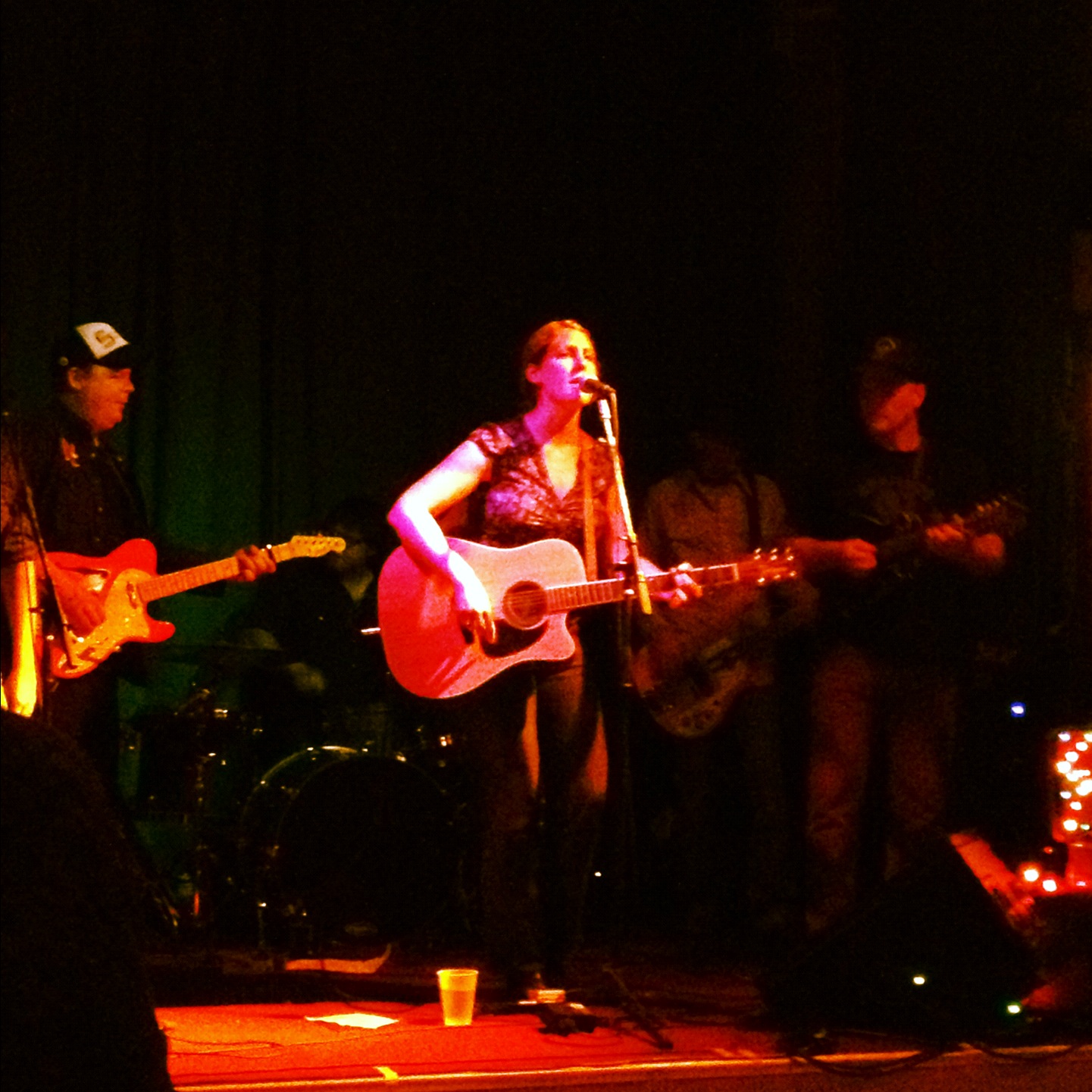
Out walking this time of night means I'm not in Seattle anymore. Though I've just seen Zoe Muth & the Lost High Rollers, the venue is not Tractor Tavern in the formerly autonomous township of Ballard, WA. I've left the Starry Plough which is, from the name down, just about Berkeley enough for me. There's about a quarter as many people in the place as there were for an open mic I attended last winter, which devolved into a regrettable level of hipsterism. Impersonating gifted singer/songwriters is apparently more appealing than listening to gifted singer/songwriters.

I keep Zoe in mind, the motivation for staying out so far past my bedtime. She looked much the same as she did when last I saw her, shrugging off a flannel jacket, her Danskos moving in time with the bass (it's possible I'm being harsh, they might have been cloggy boots).

I've Instagramed her for more orange, a color of romance since Fish Tank, one that follows me down the sodium lamplight on Telegraph. In her finest moment onstage Zoe sang "Before the Night Is Gone" in a hush not completely undone by the chatter of onlookers. I'll follow her advice here to stay inside the lines and mind the sideways wind.

For moral support I compelled my roommate to attend the show with me. With the infallible buddy system we wouldn't have any unplanned incidents with one or two of the late night hijackers whose robberies and home invasions have put Rockridge on edge. Or as on edge as you get in the least edgy Oakland neighborhood. My roommate suggested I might wear a jacket with shoulder pads, to cut a more intimidating silhouette. I scoffed and said I'd bring my Glock (har har har), as if the way my extra small, slim fit dress shirt threatened to rend at the seams over my thick trapezius muscles wasn't intimidating enough. Even besides her roughneck sartorial suggestions, her insights were invaluable. She sweetly pointed out that when I described the Lost High Roller playing the fiddle I meant to say the Lost High Roller playing the mandolin.  

My Raskolnikov coat does not (yet) exist and the roommate had to leave early, so I'm swiveling my way home alone. I try to focus on the recurrences and rhymes that please me on the near empty streets. That dirty and American grill smoke fading into the smell of that potent Ethiopian bread (its name an arrangement of consonants I'm always uncomfortable pronouncing). The discarded foil of single serving pseudophedrine and the steel of razor blades.

I like to believe that my life is not completely run by fear and anxiety. So I revert to childhood. 

I remember the temporally-appropriate Patsy Cline "Walking After Midnight" commercial. Alex Mack (well, Larisa Oleynick), at the apex of adorable girl-next-door-ness, has a then revelatory but now quaint "AT&T WorldNet" online flirtation with her fluffy-haired boyfriend. The ad reveals just how laborious sexting would have been in '97, given the need to scan in pictures and the swaths of baggy clothes everyone was wearing (such distance in volume and connotation from the PINK sleepwear preferred by present-day maidens). Sadly, Oleynick's recent life has been touched by tragedy--she will next appear in Atlas Shrugged: Part II.

This evening strikes me as close to the redheaded night in Julio Cortazar's formulation From the Observatory. A strawberry-blonde night at least. Immaculate slabs of the prose poem wander through my mind. I wonder whether the swirl of stars is likewise invisible in Jaipur, sunk in summer cloudcover and city lights.

For months that sea foam Archipelago book has been on my bedside table underneath Swann's Way, which I keep close for when I need to reach over for the word. I'm crossing the sidewalk adjacent to St. Augustine Church, frequently tagged and repainted beige in unevenly sun-lightened sections. An excuse to say the word palimpsest. Now there are fresh tendrils of hot pink spray paint on the playground wall like Proust's violet-cheeked fuchsias pressed against Combray's blackened churchfront. Made holy or not?

In Seattle I would have driven this mile home, at a time of night that required many circuits of tiny roundabouts in search of a parking place. To the denizens of the weekly (and hourly) motels a couple of blocks from my place, this circling movement also resembled the desire for late night companionship. 
 
One confused midnight I found myself pursued by a woman, platinum-haired with inch-long roots, her heels clicking like press-on nails over Formica. It was not until she pushed her face meth-disheveled face into my passenger side window that it occurred to me she was a prostitute. And did I want a date?

No, sorry, that's not what I want, no. Though a parking spot would be useful.

The saddest thing about the incident was that she was wearing eyeglasses. Most of the places she would have stayed are gone now, or were gone by the time I was.

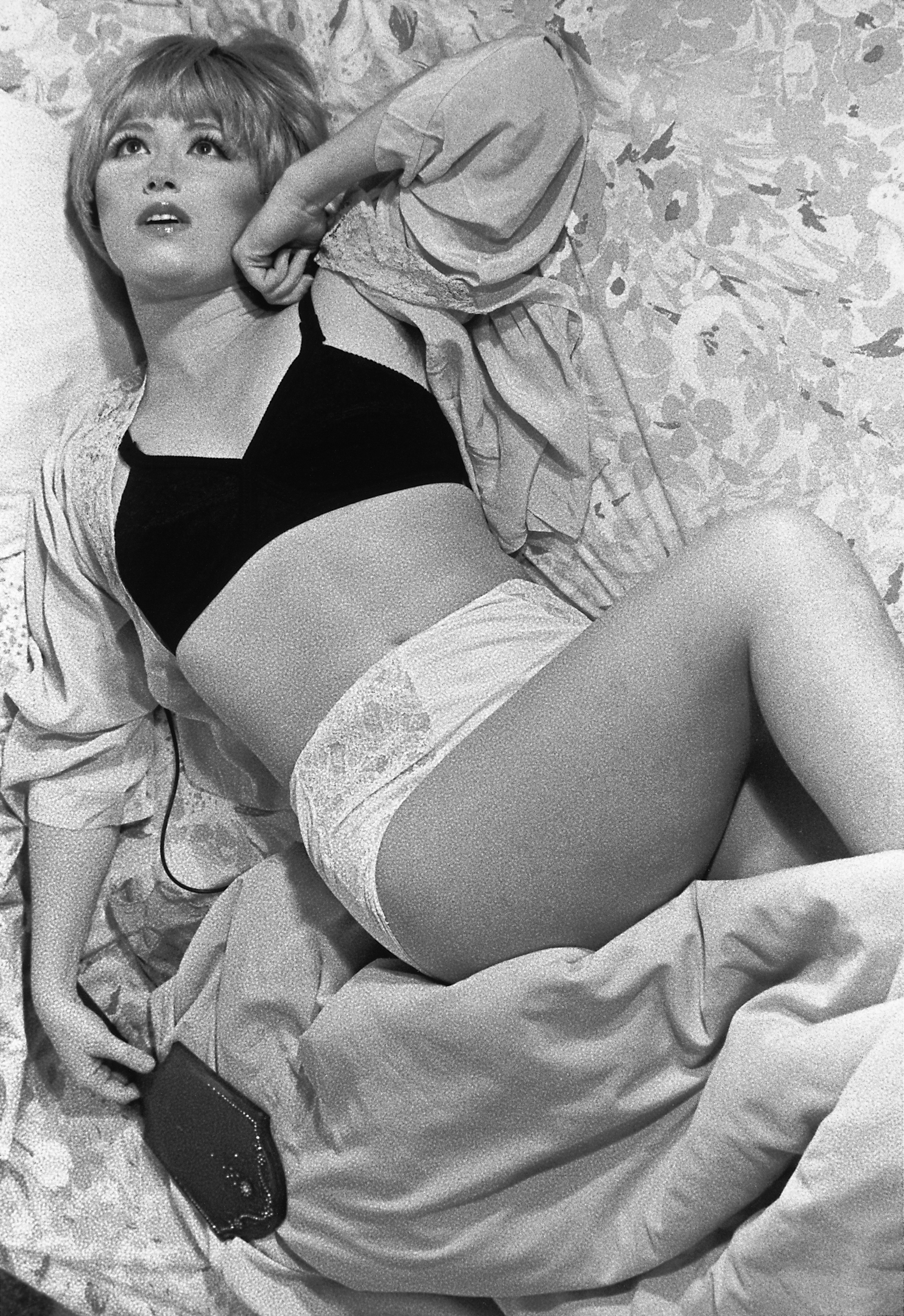
That woman's face was like something I'd find in Cindy Sherman's SFMOMA retrospective. Her near-life-sized portraits satirizing reality television--the housewives and mob wives and hoarders and fiends--all seem redundant. The show suffers terribly in comparison to the brilliant one it followed, by Francesca Woodman. Both photographers are relentlessly their own subjects but where Sherman comes forward in caricature against K-Mart backdrops, Woodman recedes into her surroundings: the cabinetry, the wallpaper, the trees.

Sherman is nevertheless worthwhile for the uncanny resemblances in her Untitled Film Stills series, where she is perfectly Monica Vitti or Janet Leigh. Or Ari Graynor in the trailer For a Good Time Call....

I need an iteration of myself as a trenchcoated Bogart, a small man puffed like the black lizard on the spine of those noir paperbacks. Thieves are unlikely to be intimidated by the small "Imported from Detroit" logo on my sweatshirt (my murder mitten t-shirt was in the wash).

I'm thinking I'm almost home and I wish Zoe had played "Starlight Hotel" and I'd heard my favorite of all her lyrics "you turned my heart a lighter shade of blue" when some distance down Alcatraz I spy what, in post-race Rockridge, Oakland, CA, would be described as two "young males in hoodies," the description given for the gentlemen stealing cell phones out of strollers and holding up au pairs on their way home from BART. 

I do not have the trenchcoat with shoulder pads or the Glock or the ease of a local. I have only a burst of adrenaline and what my father describes as congenital chicken legs.

I've been highly amused by the Olympian controversy over racewalking. High speed cameras see what the eye cannot--top walkers do in fact lift both feet off the ground for milliseconds, though it's against the rules. I wonder how fast I can move without appearing to run. Probably not as fast as I'm going.